Making the Approaches to Learning visible and practical—from one Grade 8 lesson to a wider school programme
Today I began a Grade 8 presentation lesson with a simple task:
“Present one household object that could be made smarter. Use one clear image and speak for two minutes.”
Before anyone opened Google Slides, I wrote the five Approaches to Learning on the board: communication, thinking, research, social and self-management. I asked the students to brainstorm, and then discuss, how each one might help them prepare.
The board quickly became messy. Students suggested pace, volume, images, critical and creative thinking, reliable sources, feedback, planning and focus. They also raised questions about AI-generated images and identified distractions—including friends, computers and even suddenly tempestuous weather today!.
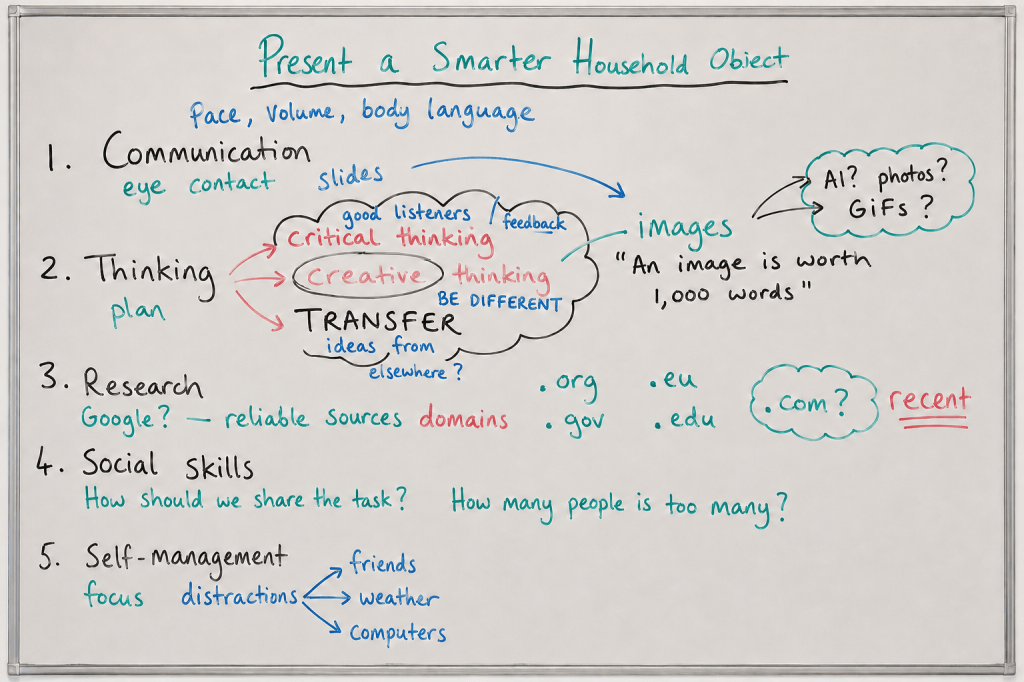
Making the invisible preparation visible
Students often think of a presentation mainly as a communication task. The discussion helped reveal the less visible work that happens before anyone speaks:
- Thinking: identify a genuine problem, create a solution and consider what might go wrong.
- Research: investigate existing products, evaluate information and record sources and images.
- Social: ask for feedback, listen and use a helpful suggestion.
- Self-management: plan the steps, manage distractions, rehearse and check the timing.
- Communication: explain the idea clearly, use a purposeful visual and speak rather than read.
Some ideas needed honing. We initially focused on domain endings such as .org, .gov and .edu when discussing reliable sources. These provide clues, but students must also consider the author, evidence, purpose, date and whether a claim can be confirmed elsewhere.
Originally, this was going to be a brief, low-stakes activity within our Living Made Easy unit. Students would invent a smarter object, speak about it and move on.
The ATL discussion showed that the activity could do more. I refined the instructions, adjusted the timing to two or three minutes individually—or three to four minutes in pairs—and added it to the course as a formative presentation.
This did not make the task high stakes. It gave students clearer expectations and made the feedback more useful. The rubric covered four areas: Idea and Thinking, Visual, Communication, and Preparation and Research. The final criterion recognised evidence of planning, seeking feedback and recording at least two sources.
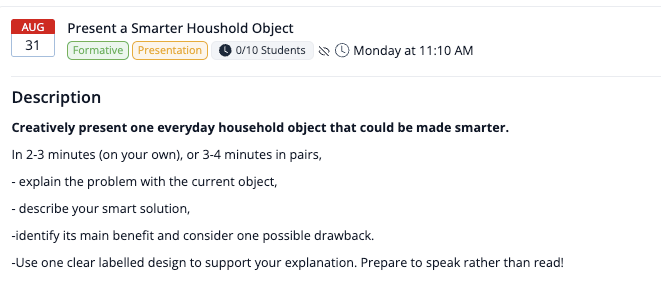
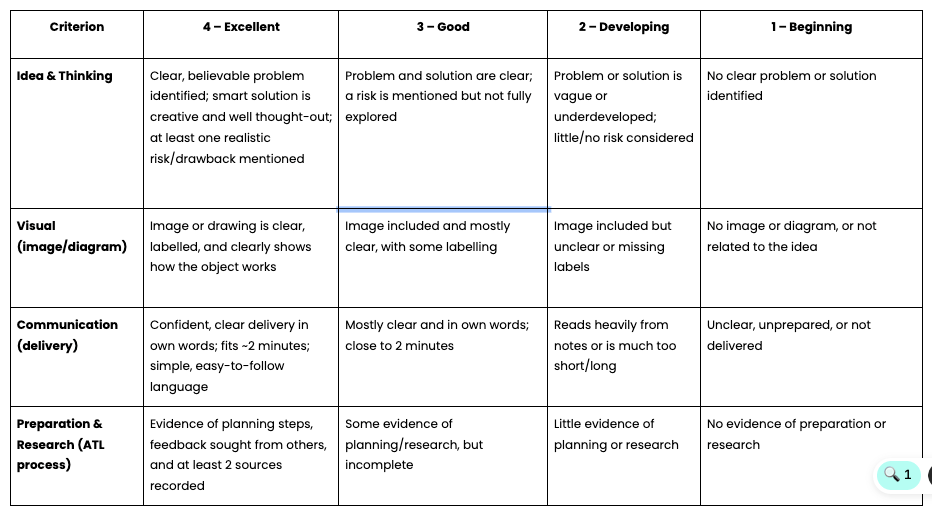
The rubric recognised both the final presentation and the process used to prepare it.
The 16-point result provides a snapshot rather than a final judgement. Comments can identify what students should carry into their next presentation, while the formative status leaves room to experiment, make mistakes and improve.
Not every small classroom activity needs a rubric. In this case, however, the criteria grew naturally from the students’ ATL discussion. The task remained manageable, but it now had a clearer purpose, a more visible process and feedback that could support future learning.
Connecting classroom and whole-school development
This lesson also connected with my wider work as ATL coordinator. Last year, staff suggestions helped us create a bank of student ATL challenges. Our school is now taking the next step by integrating ATL more deliberately into teacher planning.
The lesson reinforced a simple principle: ATL is most useful when it begins with a genuine subject task, the learning processes are made explicit and students reflect afterwards. It should support the work already happening in classrooms rather than become a separate extra.
The wider development of the challenge bank—including diagnostics, improved reflection and more targeted support for older students—deserves a post of its own. For now, the messy board was a reminder that whole-school development can begin with one real task and a conversation about how students learn.


Leave a comment